Introduction
Dark web monitoring has evolved into a mission-critical pillar within modern digital threat intelligence ecosystems. As the dark web hosts a thriving underground economy for data breaches, zero-day exploit sales, ransomware negotiations, and cybercrime-as-a-service offerings, visibility into these hidden networks can mean the difference between proactive defense and delayed response. For enterprise defenders, early detection of compromised assets or threat actor coordination is not just an advantage, it's a necessity.
Yet, dark web monitoring is far from a monolith. Vendors approach the challenge using diverse technical architectures, from scalable automated crawlers to clandestine human intelligence (HUMINT) operations embedded in encrypted forums. These differences shape the type, quality, and actionability of intelligence surfaced to security teams. In this deep dive, we analyze four of the most prominent players in the dark web intelligence space - Recorded Future, Flashpoint, Anomali, and ZeroFox - assessing their core methodologies, technological depth, and operational implications. Each vendor represents a unique position on the automation-HUMINT spectrum, and each introduces distinct trade-offs related to depth, scalability, and contextual fidelity.
Recorded Future's Intelligence Cloud integrates dark web intelligence into its broader threat intelligence and risk analytics platform. The backbone of its dark web offering is a composite architecture that combines proprietary automated crawlers, behavioral analytics, and a HUMINT layer that covers invitation-only forums, Telegram channels, and threat actor enclaves.
The Recorded Future approach is designed for cross-source correlation. Its platform surfaces dark web chatter, threat actor TTPs (tactics, techniques, and procedures), and transactional activity, linking these with vulnerabilities, malware signatures, and breach intelligence. What stands out technically is the integration of natural language processing (NLP) and machine learning models that automatically classify and enrich dark web data with metadata tags, actor identifiers, and risk scoring.
However, the platform is not plug-and-play. It demands a level of analytical maturity from the end user. Recorded Future produces vast datasets and timelines that require filtering and contextual parsing. Without dedicated threat analysts, organizations may struggle to extract actionable value from the intelligence stream.
For SOCs, CTI units, and cyber fusion centers with the bandwidth to leverage actor correlation, historical data pivoting, and attribution frameworks, Recorded Future offers one of the most powerful operational threat intelligence platforms in the market. Its dark web module does not operate in isolation but as part of a federated intelligence fabric that supports incident response, threat hunting, and executive reporting.
Flashpoint differentiates itself through an overt focus on HUMINT. Unlike vendors that rely heavily on scraping accessible or semi-restricted sources, Flashpoint embeds its analysts into underground communities. This includes access to closed forums, darknet marketplaces, invite-only messaging platforms like Telegram, and even threat actor groups operating on Discord and other ephemeral platforms.
Technically, Flashpoint's platform is optimized for actor-centric intelligence. It profiles cybercriminals, tracks their alias history, maps out connections between known bad actors, and provides sentiment and intent analysis of forum discussions. The depth of information is manually curated, often including threat actor motivations, targeting rationale, and discussions of operational security (OPSEC) among attackers.
Where Flashpoint excels is in its ability to offer early-stage insights into ransomware affiliate programs, initial access brokers, and zero-day marketplaces. Unlike automation-driven alerts, these HUMINT insights reveal campaigns before weaponization, or exploitation has begun.
However, the reliance on manual curation introduces latency and scalability constraints. Flashpoint may not deliver the real-time velocity needed for large-scale, automated IOC matching. Instead, the platform shines in intelligence production, campaign tracking, and attribution therefore a fit for threat analysts, cybercrime units, and national CERTs.
Anomali ThreatStream is designed as an integration-first threat intelligence management platform. Rather than specializing in proprietary dark web intelligence collection, Anomali aggregates feeds from third-party sources and correlates them with customer telemetry via SIEM and SOAR integrations. This includes some dark web coverage, largely dependent on partner data providers and commercial threat feeds.
Technologically, Anomali excels at normalization, deduplication, and IOC enrichment. Its automation layer rapidly maps new indicators to existing telemetry, enabling SOCs to operationalize threat intelligence without having to build their own parsing logic. For organizations looking for correlation engines that stitch together signals from dozens of feeds including some dark web content, Anomali serves this role efficiently.
However, Anomali does not provide actor-level insights or curated dark web intelligence. It is not designed for deep investigative work or proactive reconnaissance of high-risk dark web communities. Its strength lies in enabling automated workflows and supporting IOC-to-telemetry detection logic.
For enterprises with high SIEM and SOAR maturity, Anomali provides value by improving detection efficacy and automation. But for teams looking to surface early-warning signals from ransomware operators or map threat actor intent, the platform falls short.
ZeroFox's platform blends digital risk protection (DRP) with dark web monitoring, offering a surface-to-dark ecosystem for asset protection. The platform emphasizes speed and automation, crawling paste sites, surface leaks, open directories, TOR-based marketplaces, and forums to identify exposed credentials, leaked data, and malicious mentions.
From a technical standpoint, ZeroFox uses automated classification algorithms and alerting mechanisms to generate high-volume, low-latency notifications. These are often tied to brand monitoring, credential leakage, or data exposure scenarios. The solution is particularly tuned to identifying corporate and executive risks, such as impersonation, fraud schemes, and phishing infrastructure.
ZeroFox prioritizes actionable alerts over deep strategic context. It is not built to support actor attribution, malware correlation, or detailed campaign analysis. Its dark web module covers accessible sources with limited engagement in closed communities.
For organizations that need rapid deployment, user-friendly dashboards, and alert-based workflows for known data exposure vectors, ZeroFox is a strong fit. However, it is unlikely to serve threat intelligence teams seeking high-context insights or access to deeper criminal networks.
Conclusion
The dark web continues to be a rich, if volatile, domain for harvesting preemptive threat intelligence. Whether tracking ransomware campaigns, leaked credentials, or actor collaboration, the right monitoring solution must match an organization's intelligence maturity and operational use case.
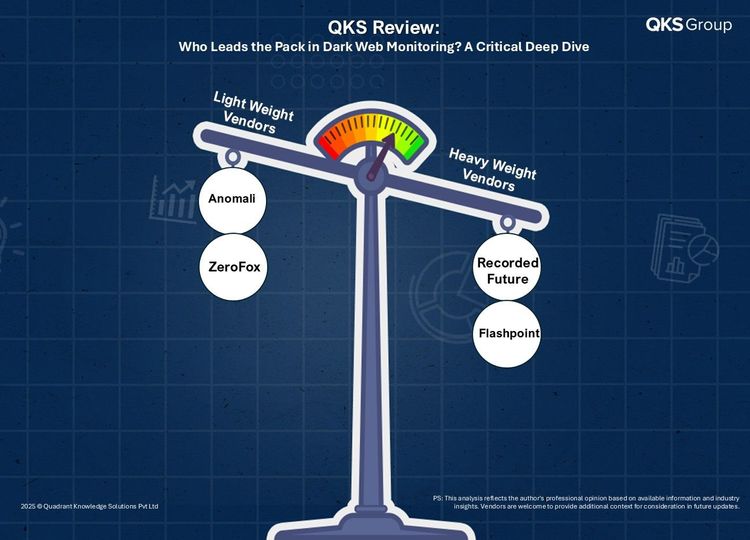
Recorded Future and Flashpoint represent the heavyweight segment of the market. Both invest in proprietary infrastructure, be it advanced machine learning or embedded HUMINT, to deliver curated, actor-linked, and campaign-relevant insights. These platforms are ideal for threat intel teams with the skills to contextualize and act on raw intelligence. They offer powerful tools for attribution, malware ecosystem mapping, and risk prioritization but require more operational lift in terms of analyst effort and integration.
Anomali and ZeroFox, on the other hand, cater to automation-focused workflows. Their platforms support alerting, IOC matching, and scalable integrations but do not dive deep into the opaque layers of dark web forums. For organizations in the early stages of threat intelligence adoption or those prioritizing rapid operationalization over strategic context, these vendors offer low-friction entry points.
In an era where threat actors increasingly rely on the dark web to organize and scale their attacks, overlooking this intelligence layer is no longer tenable. But discerning between vendor offerings requires more than marketing claims. Security leaders must evaluate the scope of collection, the level of contextual processing, the fidelity of attribution, and the operational effort required to extract value. The dark web may be murky, but choosing the right monitoring partner doesn't have to be.
Disclaimer:
This blog is based on independent research and publicly available information. The insights presented reflect the views of QKS Group and are for informational purposes only. While we strive for accuracy, we do not guarantee completeness or absolute correctness. Vendors are welcome to provide clarifications or updates. If any vendor listed in this analysis wishes to provide additional context or clarification, we welcome a briefing call and will consider incorporating relevant updates. This analysis is not intended to disparage any vendor but to provide an informed, balanced perspective. We encourage open and constructive dialogue to foster transparency and a deeper understanding of the industry.
Author: Arpita Dash, Analyst - Security Analytics and Automation at QKS Group