Introduction:
Cybersecurity Risk Rating (CRR) platforms are marketed as predictive indicators of organizational security. The premise is appealing: a single score that reflects an enterprise’s likelihood of being breached. In practice, however, most ratings engines are built on hygiene signals rather than adversarial risk. External observables such as patch management, certificate validity, DNS hygiene, and exposed ports are valuable indicators of IT discipline, but they are only loosely correlated with attacker behavior. A company may appear vulnerable because of a misconfigured system yet remain an unattractive target for adversaries; conversely, an organization with seemingly clean hygiene can still be compromised through identity theft or supply chain exploitation. Without the integration of contextual analytics and threat intelligence, many CRR scores risk becoming misleading proxies of breach probability.
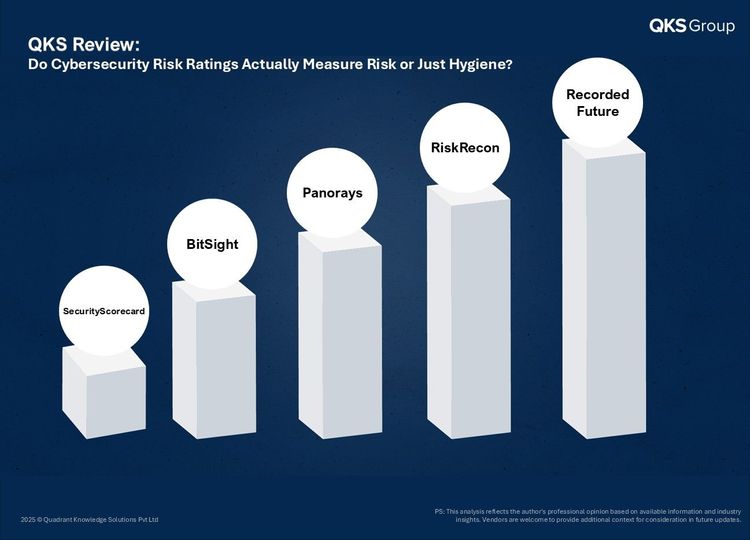
This review evaluates five vendors, Recorded Future, RiskRecon, Panorays, Bitsight, and SecurityScorecard, to determine whether their approaches move beyond surface hygiene into actual risk measurement.
Why It Matters
Cybersecurity Risk Ratings are increasingly woven into procurement, insurance underwriting, and regulatory oversight, often treated as shorthand indicators of breach likelihood. The challenge is that most scores are still derived from hygiene signals rather than adversarial context. An organization may be penalized for expired certificates or open ports that attackers are not actively exploiting, while another may appear “healthy” yet be targeted through identity compromise, insider threats, or supply chain vectors invisible to hygiene scans.
The consequences are far-reaching. Insurers basing underwriting on hygiene-heavy scores risk mispricing policies and absorbing unexpected losses. Regulators that treat ratings as compliance benchmarks may reinforce optics rather than actual resilience. Procurement teams may adopt thresholds that overlook suppliers already under active targeting. For enterprise defenders, the reliance on static posture metrics obscures the dynamic nature of attacker campaigns.
Looking forward, CRR platforms will need to evolve beyond checklist-style audits. The path forward is integration: combining continuous attack surface monitoring with contextual analytics, intelligence on active adversary behavior, and even signals from identity and cloud ecosystems. The future of risk ratings lies in dynamic, intelligence-driven scoring that reflects not only what is misconfigured but also what is being targeted. Without this shift, CRR will remain a procurement tool rather than a true predictor of organizational risk.
Recorded Future
Recorded Future distinguishes itself by embedding threat intelligence directly into its ratings model. Exposures are not only flagged but cross-referenced with dark web chatter, breach campaigns, and adversary activity. This transforms posture assessments into dynamic signals that indicate whether vulnerabilities are actively exploited, providing a level of adversary-aware context absent from hygiene-heavy platforms.
Recorded Future delivers the most intelligence-driven ratings by incorporating adversary intent and threat context. The drawback is that coverage breadth does not match the scale of larger hygiene-focused platforms, making it less comprehensive for universal supplier monitoring.
RiskRecon
RiskRecon, a Mastercard company, adds a significant differentiator by contextualizing vulnerability findings. Rather than treating all exposures equally, it adjusts severity scores based on the asset’s criticality, business value, and exposure profile. This contextual approach makes ratings more relevant to enterprise risk management and aligns them closer to actual business impact. However, its refresh cadence is slower than some peers, which limits the platform’s ability to capture fast-moving changes in threat surfaces.
RiskRecon’s contextual weighting is a clear methodological advance over hygiene-centric peers. The drawback is that slower update cycles constrain its ability to provide near-real-time risk visibility, reducing its value for organizations needing dynamic monitoring.
Panorays
Panorays blends external scanning with vendor questionnaires, positioning itself at the intersection of governance, risk, and compliance. This dual model encourages supplier engagement and provides organizations with a fuller governance perspective. However, the methodology leans toward compliance validation rather than adversarial modeling. The reliance on vendor cooperation in completing questionnaires reduces independence and makes the platform less effective for capturing adversary-driven exposures.
Panorays is best suited for organizations that prioritize vendor governance and policy compliance workflows. Its ratings, however, reflect compliance posture more than actual breach probability, making it less effective for predictive security assessments.
Bitsight
Bitsight pioneered the CRR market and continues to serve as a benchmark for insurers and regulators. Its methodology correlates hygiene data with historical incident information, providing a level of statistical legitimacy. The platform relies heavily on external scan findings such as outdated software, DNS misconfigurations, and unusual traffic patterns. These inputs are scalable and easy to quantify, but they rarely reflect how sophisticated attackers select or exploit targets.
Bitsight’s strength is market credibility, making it one of the most widely accepted benchmarks in regulatory and insurance contexts. Its limitation is that the scoring framework remains dominated by hygiene-based data, which reduces its reliability as a forward-looking predictor of breach risk.
SecurityScorecard
SecurityScorecard operates at unmatched scale, rating millions of organizations across industries. Its platform delivers breadth of visibility, which is especially useful for procurement teams conducting large-scale supplier assessments. The ratings are built on dozens of externally observable metrics such as misconfigurations and patching lapses. While this provides rapid coverage, the weighting model often penalizes organizations for minor hygiene deficiencies without demonstrating a clear link to increased breach probability.
SecurityScorecard’s advantage lies in its extensive reach and accessibility, making it a strong tool for supplier due diligence. However, its predictive accuracy remains shallow because scores emphasize exposure snapshots rather than adversary-driven risk signals.
Final Verdict
The CRR market is split between hygiene measurement and emerging risk prediction. Recorded Future and RiskRecon are the early movers toward intelligence-led scoring. Recorded Future embeds adversary intent, transforming static exposures into dynamic risk signals, while RiskRecon contextualizes vulnerabilities based on asset value and criticality. These approaches signal the direction CRR must take.
Panorays, Bitsight, and SecurityScorecard remain anchored in hygiene-heavy models. Panorays integrates governance workflows but reflects compliance posture more than adversary exposure. Bitsight retains credibility with insurers and regulators, yet its scoring remains rooted in statistical hygiene correlations. SecurityScorecard delivers unmatched scale, but its predictive depth is shallow, emphasizing coverage over risk relevance.
For CRR to become more than a procurement checklist, platforms must evolve into dynamic, intelligence-driven systems that combine attack surface monitoring with real-time adversary insights. Until then, the market will remain divided between those shaping the future of risk measurement and those reinforcing hygiene as a proxy for security.
Disclaimer:
This blog is based on independent research and publicly available information. The insights presented reflect the views of QKS Group and are for informational purposes only. While we strive for accuracy, we do not guarantee completeness or absolute correctness. Vendors are welcome to provide clarifications or updates. If any vendor listed in this analysis wishes to provide additional context or clarification, we welcome a briefing call and will consider incorporating relevant updates. This analysis is not intended to disparage any vendor but to provide an informed, balanced perspective. We encourage open and constructive dialogue to foster transparency and a deeper understanding of the industry.
Author: Arpita Dash, Analyst - Security Analytics and Automation at QKS Group