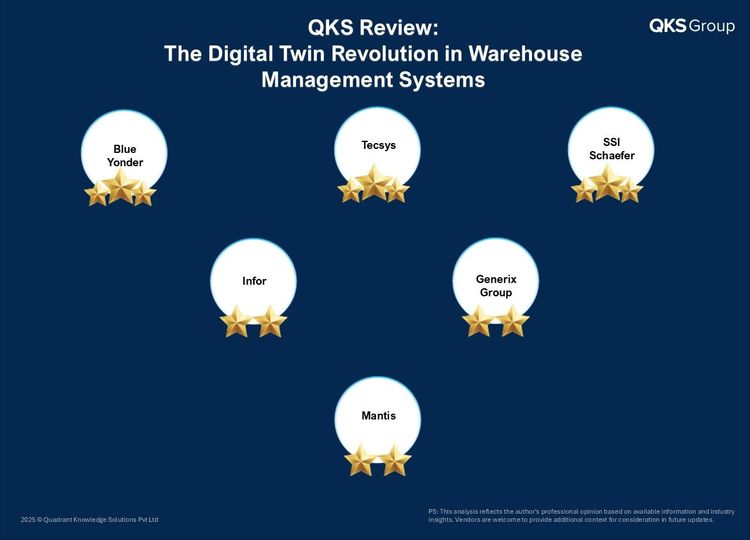
In this analysis, we assess 6 leading WMS vendo Blue Yonder, Generix Group, Infor, Mant, SSI Schaefer, Tecsys against three critical parameters for digital twin adoption:
- Real-time data integration
- Simulation and optimization capabilities
- Scalability and flexibility
Pioneers in the Digital Twin Space
Blue Yonder
Blue Yonder is a frontrunner in applying digital twin technology through its Blue Yonder platform. It seamlessly integrates IoT data for real-time synchronization between physical and digital warehouses. With advanced AI-driven optimization tools, users can simulate labor shortages, demand surges, or layout changes. Its scalability supports complex, multi-site operations, solidifying its leadership position.
Tecsys
Tecsys has made significant strides with its Digital Twin 3D Heat Map, allowing dynamic visualization of warehouse activities based on real-time data. The feature supports scenario modeling and rapid adjustments, all within a configurable cloud platform. The Tecsys’ approach makes simulation accessible without requiring extensive customization and is available out-of-the-box and does not require professional services.
SSI Schaefer
SSI Schaefer uses digital twins to model and control automated systems in real time. Its solutions enable continuous learning and adaptive operations without interrupting live workflows. Strong AI integration and scalability make it a true pioneer in autonomous, digital twin–driven warehouse environments.
Fast Followers
Infor
Infor’s WMS includes integrated 3D visual analytics and predictive modeling that closely align with digital twin principles. It allows users to simulate operational changes, optimize slotting, and manage resources in real time. Though slightly behind the pioneers in AI depth, Infor’s broad capabilities and real-time integration make it a solid fast follower.
Generix Group
Generix has begun integrating digital twin elements through its resource modeling and simulation tools. Its solutions help forecast labor and equipment needs based on operational scenarios. With robust integration capabilities and cloud-based deployment, Generix is positioning itself well, especially for 3PLs and mid-sized enterprises seeking simulation functionality.
Lagging Behind
Mantis
Mantis provides reliable WMS functionalities for large and mid-sized enterprises but lacks advanced digital twin capabilities. Real-time data synchronization and AI-driven simulation tools are not core elements of its current offering. While scalable and configurable, Mantis remains behind peers in embracing simulation and twin-driven optimization.
The Future of WMS and Digital Twins
As warehousing becomes increasingly dynamic and data-driven, digital twins will no longer be optional they will be essential. Vendors that invest in real-time data infrastructure, scenario simulation, and scalable cloud architecture are best positioned to lead the next generation of warehouse management. For organizations evaluating WMS options, assessing digital twin maturity is key to future-proofing fulfillment operations.
Disclaimer:
This blog is based on independent research and publicly available information. The insights presented reflect the views of QKS Group and are for informational purposes only. While we strive for accuracy, we do not guarantee completeness or absolute correctness. Vendors are welcome to provide clarifications or updates. If any vendor listed in this analysis wishes to provide additional context or clarification, we welcome a briefing call and will consider incorporating relevant updates. This analysis is not intended to disparage any vendor but to provide an informed, balanced perspective. We encourage open and constructive dialogue to foster transparency and a deeper understanding of the industry.
Author: Nithin Bhaskaran, Senior Analyst at QKS Group
Co- Author: Kumar Anand, Associate Director & Principal Industry Analyst at QKS Group