The Promise and Pitfalls of VSM Platforms
In an era where software delivery cycles are expected to be fast, iterative, and value-centric, Value Stream Management (VSM) platforms have emerged as a proposed solution to bridge the longstanding disconnect between business strategy and engineering execution. These platforms, by design, promise end-to-end visibility into how value flows from ideation to production, offering decision-makers at every level of the organization a clear, data-informed understanding of their software delivery pipeline.
This value proposition is rooted in the need for modern organizations to manage increasingly complex software delivery ecosystems that involve hybrid cloud environments, globally distributed teams, and a continuous integration of new technologies such as AI-powered development tools and platform engineering. However, while the conceptual intent behind VSM is strategically sound, the practical execution has often fallen short due to a confluence of architectural and operational challenges.
Among the most technically entrenched issues is the uncontrolled proliferation of software development tools and the resulting fragmentation of engineering data. As organizations scale and diversify, the tooling ecosystem becomes increasingly chaotic, driven by team autonomy, legacy infrastructure, and a lack of centralized integration strategy. This fragmented tooling sprawl severely undermines the VSM platform’s ability to stitch together a coherent and reliable representation of end-to-end value flow. As a result, what begins as a well-intentioned effort to improve transparency and accelerate delivery often devolves into a reactive battle against disconnected systems, unreliable metrics, and low platform adoption. This blog delves deep into how this hidden enemy, tool and data fragmentation, is silently eroding the effectiveness of VSM platforms across enterprises.
The Structural Challenge: Tool Proliferation and Data Fragmentation in Modern DevOps Environments
The foundational premise of any VSM platform is that it can provide a unified lens through which the flow of value, from customer need to production release, can be observed, measured, and optimized. Achieving this, however, presupposes a coherent, interconnected data fabric across the various stages of the software development lifecycle. In reality, most organizations operate with a disjointed web of tools that reflect years of decentralization, M&A activity, legacy infrastructure, and bottom-up adoption of best-of-breed point solutions. This results in an operational architecture that is inherently fragmented, making it nearly impossible for VSM platforms to deliver meaningful, continuous visibility without first addressing foundational data chaos.
It is routine, particularly in mid-to-large-scale enterprises, to find teams working with Jira or Azure Boards for planning, GitHub or GitLab for version control, Jenkins or Azure DevOps for CI/CD, ServiceNow for change management, Datadog for observability, and Slack or Microsoft Teams for communication. While each tool may serve its localized purpose effectively, they rarely share a common schema, taxonomy, or data model. The result is a proliferation of inconsistent metadata, disconnected workflows, and incomplete traceability, a condition where value stream mapping becomes more of a hopeful exercise than an empirical process.
This tool sprawl and data heterogeneity impose significant limitations on VSM platforms, which rely on tightly linked artifacts to compute key delivery metrics such as flow time, deployment frequency, and work item ageing. When those linkages are broken, for example, when a pull request is not associated with a Jira ticket or a production incident lacks upstream context, the analytical fidelity of the platform collapses. Instead of generating strategic insights, the platform presents teams with dashboards full of partial truths, shallow visualizations, or generic metrics that are too abstract to drive any meaningful improvement.
Moreover, many VSM platforms compound the problem by treating integration as a technical checkbox rather than an architectural priority. They offer shallow, read-only connectors, limited field mappings, or batch-sync mechanisms that degrade under real-time usage. The illusion of visibility becomes dangerous, as teams may unknowingly base decisions on stale, inconsistent, or incomplete data. The very system meant to unify the software delivery pipeline begins to mirror the fragmentation it set out to fix, turning VSM from a system of insight into a system of confusion.
Engineering Impact: How Fragmented Data Degrades VSM Accuracy and Adoption
The issue of tool proliferation is not merely one of redundancy or excess; it represents a foundational impediment to the core value proposition of VSM platforms, the ability to deliver accurate, actionable, and context-rich engineering intelligence. At the heart of every VSM platform lies a dependency on traceability: the ability to follow a work item from its inception (such as a user story in Jira) through its development lifecycle (via pull requests, code reviews, builds, and tests) to its deployment and operational feedback loop (through deployment logs or incident tickets).
However, when the linkages between these lifecycle artifacts are broken, inconsistently applied, or omitted altogether, as is often the case in large, decentralized engineering environments, the data collected becomes structurally deficient. Developers may bypass process discipline due to velocity pressures, PRs may lack issue references, and post-deployment insights may never be retrofitted to the originating requirement. In such scenarios, VSM platforms become populated with orphaned signals that cannot be reliably stitched into coherent flow units.
The impact is profound: key engineering metrics like Flow Time, Cycle Time, and Deployment Frequency lose their precision. Dashboards begin to display polished but inaccurate representations of throughput and efficiency, misleading both engineering and business stakeholders. Teams attempting to diagnose delivery bottlenecks are left chasing phantom delays or celebrating velocity improvements that are either non-existent or misattributed. Worse, these analytical gaps can generate a false sense of confidence that derails strategic decision-making, causes flawed resourcing models, and undermines leadership trust in engineering data altogether.
This breakdown in data integrity also has a corrosive effect on platform adoption. Engineers disengage from tools that fail to reflect the actual state of work or require burdensome manual upkeep. Team leads and managers begin to rely on parallel reporting structures or custom-built scripts outside of the VSM platform. Consequently, the platform, instead of serving as a unified command center, devolves into a passive dashboard layer that lacks the credibility or relevance to influence engineering behaviour. Ultimately, the fragmentation of data doesn’t just degrade the accuracy of metrics; it erodes the very culture of measurement and accountability that VSM platforms are meant to enable.
The Cost of Complexity: Technical and Financial Burdens on VSM Users
The cost of fragmented tooling and inconsistent engineering data within the context of VSM platforms extends far beyond analytical inaccuracy; it introduces systemic inefficiencies, both technical and financial, that accumulate across the entire software delivery lifecycle. Organizations that invest in VSM platforms do so under the assumption that these systems will provide a clear return on investment through improved flow visibility, faster cycle times, and better alignment between engineering output and business value. However, when underlying data sources are fractured, these expected outcomes are delayed, diluted, or altogether unachievable.
From a technical operations standpoint, maintaining a VSM deployment in a fragmented environment requires sustained effort in creating and managing bespoke integrations, enforcing rigid data governance policies, and resolving frequent data mismatches between tools. VSM implementations often rely on custom middleware or third-party ETL layers to reconcile divergent data schemas and fill gaps in traceability. These technical band-aids quickly become brittle as tool usage evolves, leading to growing technical debt that undermines the long-term sustainability of the VSM initiative. The platform that was meant to simplify and centralize insight begins to require its support infrastructure.
Financially, the implications are equally concerning. The total cost of ownership (TCO) for a VSM platform skyrockets when teams are forced to invest in continuous integration, maintenance, staff training, and third-party consulting just to make the platform usable. Additionally, the opportunity cost of inaccurate insights can be immense. Leaders basing roadmap prioritization, staffing models, or release strategies on flawed VSM data may inadvertently introduce bottlenecks, burn out teams, or misallocate investment toward low-impact initiatives. This compounds across quarters, turning minor misalignments into strategic missteps.
What exacerbates the situation is the failure of many vendors to acknowledge, let alone solve, these complexities in their product design. While marketing collateral often highlights advanced analytics and predictive capabilities, these features typically depend on data maturity levels that are rarely present in most enterprise environments. Without deeply engineered, resilient integrations and intelligent data normalization at the core, the VSM platform becomes yet another tool contributing to enterprise noise, a promise of clarity that ultimately collapses under the weight of integration fragility and data inconsistency.
In short, the cost of using a VSM platform in an unprepared or fragmented environment is not just high, it’s compounding. Every insight generated without trustworthy data adds risk, every manual workaround reduces confidence, and every dollar spent on support infrastructure eats into the ROI that VSM is supposed to deliver. These hidden costs are often only discovered after go-live, by which time teams are already entangled in workflows they no longer trust and dashboards they no longer use.
What to Look For: Key Evaluation Criteria for VSM Buyers
Given these challenges, organizations evaluating VSM platforms must adopt a far more rigorous, technically grounded, and reality-aware lens. It is no longer sufficient to be impressed by vendor claims of high-level visibility, aesthetically pleasing dashboards, or superficial integrations. Instead, buyers should focus on the platform’s ability to operate as a resilient, intelligent data unification layer capable of bridging the inherent fragmentation in modern software delivery ecosystems.
First and foremost, integration depth should be scrutinized with the same rigour as core platform features. A viable VSM solution must offer robust, bi-directional, real-time integrations with tools spanning the planning, development, CI/CD, incident management, and analytics spectrum. The ability to map complex workflows, resolve conflicting metadata schemas, and automatically correlate artifacts like pull requests, user stories, and deployments is foundational. Without this, no amount of visualization or analytics capability can be trusted or actioned.
Equally important is the platform’s adaptability to non-standard workflows. Enterprises rarely operate with textbook agile processes. VSM tools must therefore be able to accommodate hybrid methodologies, domain-specific workflows, and heterogeneous toolchains without imposing rigid process templates. The ability to model team-specific states, link custom metadata, and trace incomplete or partial value streams is a sign of architectural maturity and practical foresight.
Governance, too, must be built in, not bolted on. VSM platforms should provide proactive data hygiene capabilities, enforceable tagging policies, and auditability mechanisms that do not depend on human discipline alone. Alerting for broken workflows, missing links, and delayed transitions must be treated as system-level capabilities, not optional enhancements.
Buyers should also validate whether the platform is capable of scaling from the team level to the portfolio level without collapsing under the weight of abstraction. Many tools perform adequately in isolated delivery pipelines but lose coherence when required to unify dozens of teams, hundreds of repositories, and dynamically shifting product portfolios. The ability to preserve context while generalizing insight is what separates a tactical dashboard from a strategic VSM platform.
Finally, evaluators should be skeptical of AI-driven feature sets that promise predictive insights or automated recommendations. Unless the platform has demonstrably solved for raw data normalization and contextual stitching, such features are likely to produce noise at best and misdirection at worst. In short, choosing a VSM platform requires a systemic understanding of the technical foundations required to unify fragmented data into a trustworthy, actionable, and scalable layer of engineering and business insight. Anything less is a shortcut that leads to shelfware.
A Harsh Reality Check: How Current VSM Vendors Are Failing to Deliver
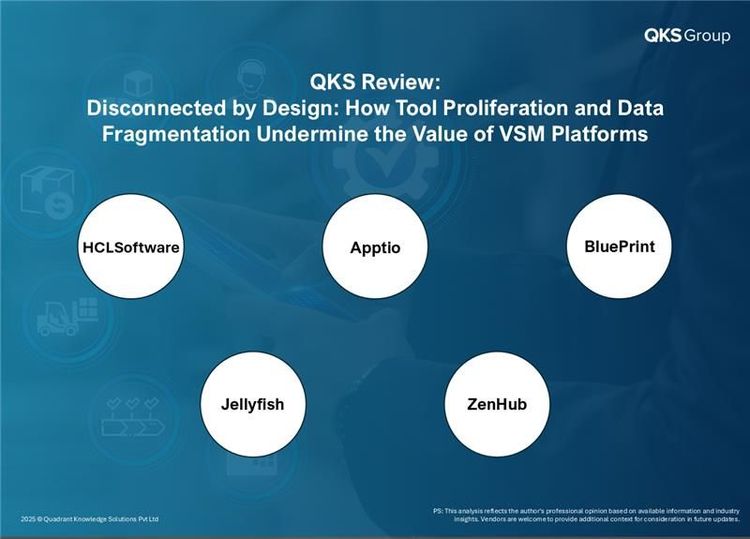
Despite the increasing popularity of Value Stream Management as a strategic construct, the actual vendor ecosystem that claims to serve this space is riddled with half-measures, incomplete capabilities, and overhyped positioning. While the language of flow, visibility, and value delivery has made its way into almost every product brochure, the technical backbone required to support these outcomes is often absent. Instead of building platforms that can truly unify engineering signals, normalize fragmented data, and provide actionable insights across diverse delivery environments, most vendors have simply rebranded existing capabilities or bolted thin layers of analytics on top of outdated, siloed systems. This has led to a landscape where the term "VSM platform" is more a marketing façade than a reflection of architectural or operational maturity. The following analysis exposes the specific ways in which some of the most well-known vendors in the space fall short of delivering the very outcomes they claim to enable.
The vendor landscape, unfortunately, remains a stark reflection of the immaturity and fragmentation that plague the VSM market. Despite the aspirational marketing, very few vendors demonstrate the architectural maturity, real-world resilience, or integration flexibility required to serve as true VSM systems of intelligence. Most platforms are either encumbered by rigid assumptions about process uniformity or suffer from a lack of deep connectivity to the broader toolchain ecosystems in which modern engineering teams operate.
Atlassian is a prime example of this misalignment. Although it has doubled down on expanding its native ecosystem with offerings like Jira, Bitbucket, Compass, and Jira Align, its approach is inherently constrained by a closed-world assumption that all teams operate within the Atlassian stack. Jira Align, despite its positioning as an enterprise-grade VSM layer, fails to deliver meaningful insight unless teams conform to predefined workflow structures and operate with absolute discipline in issue linking and artifact traceability. In reality, organically grown engineering organizations rarely operate with such uniformity, rendering the platform brittle, high-maintenance, and largely ineffective outside of greenfield or heavily standardized environments.
HCLSoftware’s Accelerate platform pitches itself as a DevOps intelligence and VSM solution, yet its architectural foundation betrays an inward bias toward HCL’s ecosystem. Integration with non-HCL tools is often limited, slow, or overly reliant on custom configuration, which undercuts the very promise of end-to-end visibility. While it does offer support for hybrid pipelines and claims extensibility through open APIs, real-world deployments reveal a pattern of fragile integration pipelines, poor synchronization accuracy, and a burdensome administrative overhead required to keep the system aligned with live delivery workflows.
Apptio, now absorbed into IBM’s software portfolio, has attempted to reframe its Targetprocess product as a VSM solution oriented around portfolio and financial governance. While it excels in top-down visualization and cost attribution, it lacks the bottom-up telemetry and signal correlation required for actual engineering execution visibility. In practice, Targetprocess functions more as a financial overlay than a delivery control plane, offering strategic stakeholders abstracted summaries but depriving teams of the operational insight needed to improve software flow. Its inability to deeply integrate with CI/CD pipelines or source control systems severely limits its efficacy in a modern DevOps context.
Blueprint has tried to capitalize on its niche strength in highly regulated industries by leaning into requirements traceability and compliance reporting. However, the platform’s dated architecture and weak connectivity with developer-centric tools make it unsuitable for dynamic, iterative delivery environments. Blueprint may satisfy auditors and compliance managers, but it offers little value to engineering teams seeking to understand or improve how work flows through the system. Its relevance is largely restricted to narrowly scoped use cases rather than serving as a full-spectrum VSM solution.
Jellyfish, while often grouped with VSM platforms, operates more accurately as a developer productivity and engineering intelligence tool. Its strength lies in its ability to correlate Git metadata and ticket data to surface insights on team performance and bottlenecks. However, its value proposition is confined to the engineering manager level. It lacks true end-to-end visibility and cannot orchestrate or align complex value streams across cross-functional teams or portfolios. For enterprises seeking unified governance across development, delivery, and value realization, Jellyfish falls short.
Zenhub, which positions itself as a lightweight VSM tool for GitHub-centric environments, may be useful for startups or teams operating entirely within GitHub. However, its simplicity becomes a liability in scaled environments where compliance, auditability, and portfolio-level coordination are non-negotiable. The platform lacks robust governance features, mature reporting layers, and extensibility, making it fundamentally inadequate for large-scale VSM implementations. Zenhub might serve as a stepping stone for early-stage companies, but it is not equipped to handle enterprise complexity.
Collectively, these vendor shortcomings highlight a market still in its early innings, where tools are either overfitted to narrow use cases, locked into ecosystem-specific assumptions, or lacking the connective tissue required to bring engineering signals into a coherent business context. Until vendors solve the architectural and integration limitations that underpin these failures, the VSM category will continue to overpromise and underdeliver.
Conclusion: Fixing Fragmentation Before Selling Flow
In conclusion, the conceptual appeal of Value Stream Management platforms remains undeniably strong; the promise of continuous visibility, data-driven governance, and real-time optimization of software delivery pipelines is deeply aligned with the strategic imperatives of modern digital organizations. However, the operational reality of these platforms continues to fall short due to the most entrenched and under-addressed obstacle: systemic fragmentation across tools, data models, workflows, and governance practices.
Most VSM platforms today have yet to earn their place as systems of intelligence. They offer surface-level visibility that quickly collapses under real-world conditions characterized by noisy data, team autonomy, and disconnected lifecycle events. Vendors that focus primarily on executive dashboards, without solving the underlying telemetry and integration challenges, effectively sell an illusion of control, one that erodes trust the moment stakeholders attempt to act on the presented metrics.
The future of VSM will not be defined by cosmetic analytics layered over chaotic systems, but by platforms that can normalize fragmented data at scale, maintain semantic continuity across diverse workflows, and generate contextual, role-specific recommendations that engineers, managers, and executives alike can act on confidently. This requires platforms to be built with engineering complexity in mind, not abstracted away from it, and to incorporate robust integration architectures, policy-driven data enforcement, and intelligent insight delivery natively into their design.
For buyers, the lesson is clear: do not invest in VSM platforms based on vision slides or buzzword-heavy demonstrations. Evaluate how well a vendor’s platform handles heterogeneous tooling, data stitching, and governance enforcement in practice. Prioritize architecture over aesthetics, resilience over roadmap, and interoperability over vendor lock-in.
Until VSM vendors fully internalize that flow visibility is only as good as the fidelity of the data it rests upon, the market will continue to overpromise and underdeliver. Fixing fragmentation isn’t a post-sales activity; it’s the precondition for VSM to even begin to function. The next generation of VSM success stories will be written not by who visualizes the value stream best, but by who integrates it most intelligently.
Disclaimer:
This blog is based on independent research and publicly available information. The insights presented reflect the views of QKS Group and are for informational purposes only. While we strive for accuracy, we do not guarantee completeness or absolute correctness. Vendors are welcome to provide clarifications or updates. If any vendor listed in this analysis wishes to provide additional context or clarification, we welcome a briefing call and will consider incorporating relevant updates. This analysis is not intended to disparage any vendor but to provide an informed, balanced perspective. We encourage open and constructive dialogue to foster transparency and a deeper understanding of the industry.
Author: Nikhilesh Naik, Associate Director at QKS Group