February 10, 2026
8:00 PM - IST
Over the past decade, CSCOs have invested heavily in supply chain visibility platforms, control towers, and analytics layers to gain real-time awareness across planning, sourcing, manufacturing, and logistics. While these investments have improved monitoring and reporting, many organisations still struggle to translate visibility into consistent operational control.
As supply chains become more complex due to demand volatility, geopolitical risk, multi-tier supplier networks, and rising service expectations, CSCOs are increasingly measured by execution outcomes, not dashboard maturity. In 2026, the challenge is no longer about seeing disruptions early, but about acting decisively, at scale, and with predictable results.
In this research-led panel discussion, QKS Group analysts and industry CSCOs examine why visibility has not delivered control, where execution breaks down in real operations, and how supply chain leaders are redefining technology, operating models, and governance to regain decision authority. Drawing on SPARK Plus buyer intelligence, the session converts enterprise experience into practical guidance for supply chain leadership.
This session offers a practitioner-focused discussion on how visibility platforms are used today, why manual coordination still dominates critical situations, and what needs to change to achieve operational control.
Participants will gain clarity on how control differs from awareness, why automation remains limited despite advanced platforms, and how CSCOs are reshaping their technology and organisational strategies.
The conversation prioritises real-world experience over vendor narratives, helping CSCOs and supply chain technology leaders understand what actually enables execution reliability in complex environments.
Opening Context
How supply chain visibility became a baseline capability
Why CSCO expectations have moved from monitoring to control
The widening gap between insight and execution authority
Objectives and structure of the session
Why Visibility Still Fails to Deliver Operational Control
Alert-driven operations and decision fatigue
Fragmented system ownership and data handoffs
Delays between detection, decision, and execution
Limited automation in exception handling
Control vs Awareness - A Practical CSCO Distinction
Defining operational control in business terms
Decision rights and escalation models
Human-led vs system-led interventions
Maturity stages from visibility to control
Enterprise Reality Check
How visibility platforms are actually used day to day
What happens during large-scale disruptions
Dependence on war rooms and manual coordination
Financial and service-level impact of delayed action
Metrics That Indicate True Operational Control
Detection-to-resolution cycle time
Automation ratio in exception handling
Service recovery consistency
Cost per disruption event
Practical Takeaways for CSCOs and Practitioners
Reassessing current visibility investments
Immediate 90-day actions
Medium-term structural priorities
Using buyer intelligence as a continuous input
Exception Resolution Cycle Time - Speed from detection to corrective action
Automation Coverage - Share of disruptions handled without human escalation
Execution Reliability - Stability of service levels and plan adherence
System-to-System Decision Latency - Time between planning updates and execution changes
Designing technology stacks that support execution, not just visibility
Integrating planning and execution systems
Reducing organisational friction in decision flows
Using buyer intelligence to de-risk platform selection
Building long-term operational confidence
Chief Supply Chain Officers
Heads of Supply Chain and Operations
Supply Chain Planning and Execution Leaders
Control Tower and Digital Supply Chain Heads
Supply Chain Transformation Leaders & Enthusiast
Supply Chain Technology Decision Makers
Gain access to SPARK Plus buyer intelligence and enterprise-led insights into how operational control is actually achieved. Leave with a grounded understanding of how CSCOs can move beyond visibility and build execution reliability in 2026
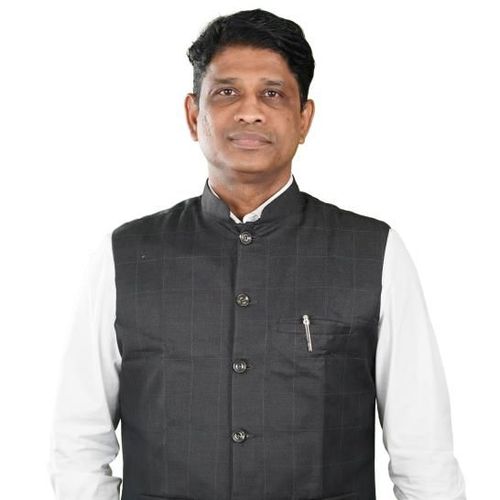
Associate Vice President & Principal Advisor – Enterprise Transformation
Sanjeevi Cuddalore Ramachandran serves as Associate Vice President & Principal Advisor for Enterprise Transformation at QKS Group, where he advises enterprise leaders on accelerating transformation initiatives that strengthen organizational resilience, improve governance maturity, and enable the responsible adoption of emerging technologies, including Artificial Intelligence. With over 25 years of experience spanning enterprise applications, ERP, SaaS, cloud platforms, cybersecurity governance, and large-scale transformation programs, Sanjeevi partners with CIOs, CISOs, CAIOs, CTOs, boards, and public-sector leaders to navigate complex transformation challenges while aligning technology investments with strategic business objectives. His advisory expertise encompasses AI transformation strategy, cyber resilient transformation, enterprise governance, technology risk management, cloud-enabled operating models, enterprise modernization, program governance, and execution excellence. He helps organizations assess transformation readiness, benchmark maturity, identify capability gaps, and establish governance frameworks that drive sustainable business value while balancing innovation, security, and risk. Throughout his career, Sanjeevi has led and governed enterprise transformation portfolios exceeding USD 300 million in value and contributed to the successful deployment of mission-critical platforms serving more than 20 million users globally. His experience across manufacturing, energy, oil & gas, BFSI, education, government, public sector, and technology industries provides him with a unique perspective on the operational, governance, and security challenges organizations face during large-scale transformation initiatives. At QKS Group, Sanjeevi leads executive advisory engagements focused on AI Transformation and Cyber Resilient Transformation through the SPARK Plus™ Transformation Advisory framework. He works closely with enterprise leadership teams to benchmark transformation maturity, strengthen cyber resilience capabilities, establish AI governance models, and develop actionable roadmaps that improve operational agility, business continuity, and long-term competitiveness. Known for his governance-driven approach to transformation, Sanjeevi combines deep expertise in enterprise technology, cybersecurity, program execution, and organizational change to help enterprises transform with confidence. His advisory philosophy centers on ensuring that transformation initiatives deliver measurable business outcomes while maintaining resilience, trust, and operational excellence. Sanjeevi holds globally recognized certifications including PMP®, PRINCE2® Practitioner, PMI - CPMAI™, Professional Scrum Master™ (PSM I), CRISC®, ITIL®, and IBM Enterprise Content Management (ECM) Sales Mastery. These credentials, combined with extensive enterprise leadership experience, enable him to provide practical, execution-focused guidance to organizations pursuing AI adoption, cyber resilience, and enterprise-wide transformation.


Associate Director & Principal Industry Analyst
Kumar Anand is working as an Associate Director & Principal Industry Analyst and an expert in Supply Chain Innovation, recognized for his contributions to advancing supply chain strategies. With extensive experience in logistics, procurement, inventory management, sustainability, and digital transformation, Kumar collaborates with leading organizations to enhance operational efficiency and resilience across their supply chains. As Principal Industry Analyst, Kumar leads research projects focused on supply chain management, specializing in the integration of emerging technologies such as autonomous mobile robots (AMRs), navigating technologies, and multi-enterprise supply chain business networks. His work empowers companies to navigate industry disruptions and turn challenges into opportunities using data-driven insights and proven frameworks. Kumar holds an MBA in Operations and Supply Chain, with a career that spans impactful roles in supply chain consulting and market research. He has a strong focus on evaluating and optimizing supply chain processes for global corporations. Kumar's career also includes significant contributions to market research and strategic consulting, where he has played a critical role in assessing technology trends across domains like supply chain management, AI, and digital transformation. His work has been integral to the development of forward-looking strategies that address the evolving needs of modern supply chains. With publications in supply chain planning, supply chain execution, and supply chain robotics (AMR), Kumar’s expertise is widely recognized. He continues to predict and navigate technological disruptions, crafting strategies that transform potential risks into sustainable business opportunities.

